BLACK FRIDAY DEAL: 25% OFF THE ENTIRE COLLECTION
Ruby


Rubies at DiamondsByMe
Ruby is known for its distinctive red color. The rubies in our jewelry can range from pinkish red to deep red, sometimes with a purple hue. Each stone has its own character and appearance.
The quality of our rubies
At DiamondsByMe, we work with rubies ranging in quality from AA to AAA. We look at the overall appearance: color, clarity, transparency, natural inclusions, cut and size all play a part.
A ruby can contain natural inclusions and appear semi-transparent or more transparent. These features vary from stone to stone and are part of ruby’s natural character.
Our specialist suppliers select rubies according to our preferences for color, clarity, cut and value for money. We assess each incoming batch against our own quality criteria. If a batch does not meet them, we do not use those stones in our jewelry.
Our aim is a beautiful balance of color, clarity, appearance and price.
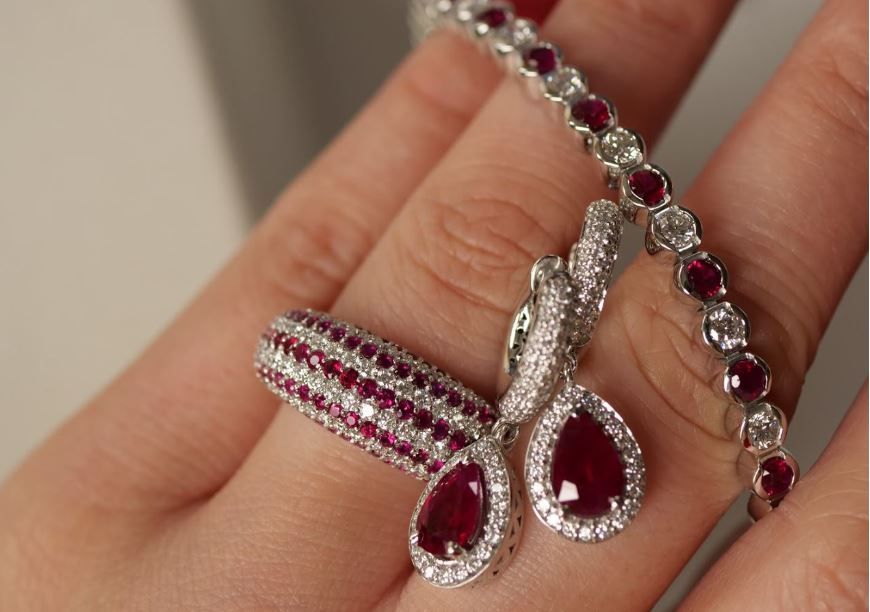
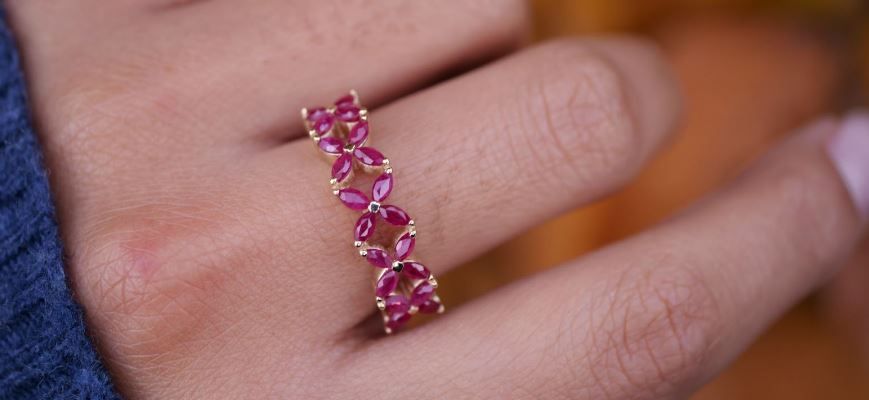
Below are examples of rubies we have set for customers.


Care of Ruby
General care for ruby: Ruby is generally resistant to shocks and liquids, but we still recommend handling this gemstone carefully.
What can you expect?
Ruby is a natural gemstone, so color, transparency, inclusions and other natural characteristics vary from stone to stone. The examples on our website give a good impression of what to expect; your stone may naturally differ slightly.
Since ruby is also seen as the stone of love due to its color, you can naturally choose this stone when looking for an engagement ring. For example, view our collection of ruby engagement rings. But also for an anniversary, it is a good idea to choose ruby. Think, for example, of a set of ruby earrings or a ruby necklace. If you want to give a set, indicate this to our consultants. They will ensure that the rubies in the ordered set match beautifully in color.
Enjoy creating your DiamondsByMe jewelry with ruby!
Also, check out our:
Finding your special ruby together
Do you have specific wishes for your ruby’s color, appearance or size? Contact our customer service team to discuss the possibilities.
If your budget is S$2,850 or more, one of our specialists can help you find your special ruby. We start with your wishes: the color and appearance you like, and how important size and clarity are to you.
Together with our specialist suppliers, we look for suitable rubies. When we find suitable stones, we send you photos and videos in advance so you can view and compare the options.
Choosing your ruby becomes part of the experience of creating your jewelry: a personal search for a stone that suits you and your wishes.
Explore our ruby rings.
Frequently asked questions about ruby
Ruby is red. Our rubies range from pinkish red to deep red, sometimes with a purple hue.
Yes. A ruby can contain natural inclusions. Their visibility and the stone’s transparency vary from one ruby to another.
We work with rubies ranging in quality from AA to AAA. We consider the overall appearance, including color, clarity, transparency, inclusions and cut.
The photos give an impression of what to expect. Ruby is a natural gemstone, so color, transparency and natural characteristics can vary.
Ruby is generally resistant to knocks and liquids, but we recommend handling your jewelry with care.
Contact our customer service team to discuss your wishes. If your budget is S$2,850 or more, a specialist can help you find a special ruby. When we find suitable stones, we send photos and videos in advance for you to compare.
Ruby, often seen as the stone of love due to its (often) warm red color, belongs to the corundum family. The stone's color is primarily created by chromium. This beautiful gem can range from pinkish-red to blood-red. On this page, you can learn more about this extraordinary gemstone.
Ruby Through the Ages
Ruby holds a prominent place among gemstones, primarily due to its striking color, which can vary from pinkish-red to deep blood-red. In ancient times, this stone was already being mined in the quarries of Burma and later made its way through trade routes to ancient Egypt and Greece, where it was used in jewelry and to decorate temples. Ruby was also beloved in medieval Rome and is mentioned multiple times in the Bible. The Jewish high priest wore ruby as one of twelve different gemstones in his breastplate, each engraved with the name of one of the twelve tribes of Israel.
Symbolism of Ruby
Ruby is associated with the base chakra. The stone provides energy and dispels exhaustion and lethargy. It is used as an aid in treating frigidity and impotence, which is why ruby is seen as a sensual stone that brings passion. Ruby strengthens the heart chakra and circulation. It helps to improve concentration and protects against negative-minded people. In ancient times, ruby was seen as the stone of life, strengthening the heart and giving strength. In astrology, ruby is linked to the zodiac signs Cancer and Leo and is the birthstone for July.
Cut
Ruby can come in almost all cuts. The most common cut is round faceted. Besides this cut, there are many other possibilities, from an oval faceted cut to a cabochon, sometimes featuring a beautiful star effect.

Facts about Ruby
Ruby derives its name from the Latin word "rubeus" or "ruber," which means red. The color is primarily caused by chromium, and the stone is a variety of the mineral corundum, which also includes sapphire. When ruby is heated, this can affect its color. Rubies naturally have inclusions, which is also characteristic of the stone. Only when a ruby is artificially created will it be completely free of inclusions. However, the fewer inclusions in the stone, the more valuable it is. In ancient times, rubies were found in quarries in Burma but are also mined in Thailand, Sri Lanka, Australia, Africa, and the states of Montana and South Carolina in the United States.
Molecular Formula of Ruby: Al2O3
Hardness of Ruby on the Mohs Scale: 9
Ruby can only be scratched by materials that are harder or have the same hardness. Diamond, for example, can scratch ruby as it is a harder stone. Ruby's toughness is good, meaning the stone will not break easily.

Imitations of Ruby
A good quality ruby is very precious. Many methods are used to imitate this valuable gemstone. Some examples include red glass, red tourmaline, almandine garnet, red spinel, etc. Naturally, traders will not tell you that the stone is an imitation and will sell it as genuine ruby. To be sure, we purchase all our stones ourselves from recognized traders. This way, we can ensure we are offering the correct product. A good quality ruby can be recognized by its color and purity. The stone is blood red and has a lively appearance.

