LIMITED TIME OFFER: 20% OFF SITEWIDE
Tourmaline
A gemstone recently added to the DiamondsByMe collection is tourmaline. This mineral, named after the Sinhalese word ‘turmali,’ comes in many colours. The word turmali means ‘stone with mixed colours.’ On this page, you can read more about this beautiful stone.
Tourmaline: history and symbolism
Tourmaline has been known around the Mediterranean since ancient times. When Dutch traders began bringing tourmaline back from their travels to Sri Lanka in the early 1700s, the stone gained recognition in Western Europe.
Tourmaline is found in various locations around the world, including Brazil, Mozambique, Zambia, Namibia, Nigeria, Afghanistan, Pakistan, China, Myanmar, and of course, Sri Lanka.
The pink tourmaline (rubellite) was used as an amulet by artists because it was believed to have a positive influence on creativity. Tourmaline is divided into seven groups, depending on the colour. Each colour has its own meaning. For example, pink tourmaline stands for friendship, green tourmaline for empathy and love, and it protects against trauma and sleep disorders. The other colours also have special properties, which you can read more about in our knowledge base on the birthstone page. Tourmaline, along with opal, is the birthstone for October and is associated with the zodiac signs Libra and Scorpio.
Paraiba tourmaline: a legend in the gemstone world
The bright blue colour of Paraiba tourmaline is often described as ‘neon’ or ‘electric.’ It is named after Paraiba, a state in Brazil, where the stone was first discovered in 1987. When well-cut, Paraiba tourmaline appears to glow even in dark environments. The colour is due to the chemical reaction of manganese and copper. Because this combination has not been found in other tourmaline variants, Paraiba tourmaline is rare and very valuable.

Tourmaline in physics
Because tourmaline is a multicolored stone, it is classified in the trade into the following varieties;
- Rubellite: this variant ranges from pink to red and can sometimes have a violet hue. Red-toned tourmaline can sometimes be mistaken for ruby.
- Verdelite: all shades of green.
- Achroite: these are the (almost) colorless tourmalines. Because they are very rare, they can also be very expensive.
- Indicolite: all shades of blue tourmaline.
- Dravite: this ranges from yellow-brown to dark brown.
- Siberite: purple-blue stones, ranging from lilac-red to violet-blue, can sometimes be mistaken for rubellite.
- Schorl: a black variant. This is very common. The name of this group comes from a term used in the mining world.
- Molecular formula of tourmaline: AX3Y6(BO3)3Si6O18(O, OH, F)4
Hardness of tourmaline on the Mohs scale: 7 / 7.5 - Tourmaline can be scratched by materials that are harder or of the same hardness. Sapphire, for example, can scratch a tourmaline. Tourmaline can be multicolored, depending on the viewing direction. This is called pleochroism.
Care of tourmaline
When set in jewelry, tourmaline is best cleaned with a little lukewarm water and a soft toothbrush. A mild soap may be used, but certainly no chemicals. These can dull the stone by damaging its surface. Tourmaline can change color when heated, so do not expose it to extreme temperatures.
Imitations of tourmaline
Tourmaline is not often imitated. This is due to the natural streak structure in the stone, which is difficult to replicate. Glass comes closest.

Cut
Tourmaline can be found in virtually all cuts. The stone color is beautifully showcased in faceted cuts. Due to the structure of tourmaline, the baguette cut is one of the most common cuts for this stone. However, cabochon-cut tourmaline is also frequently seen.
Tourmaline in DiamondsByMe jewelry
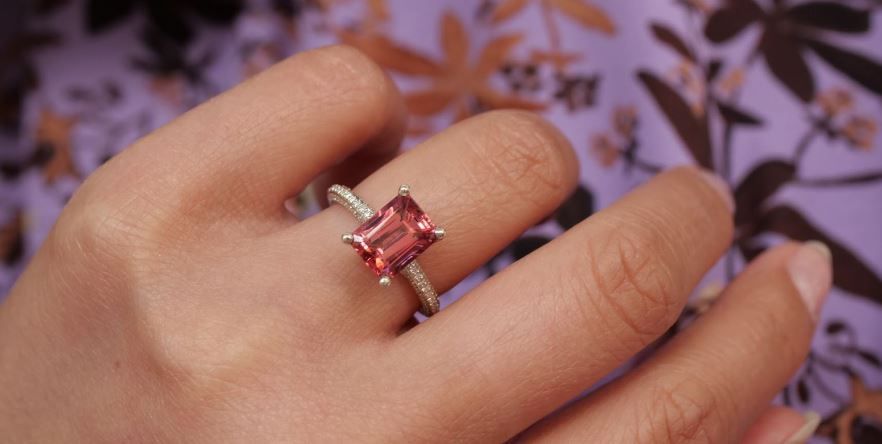
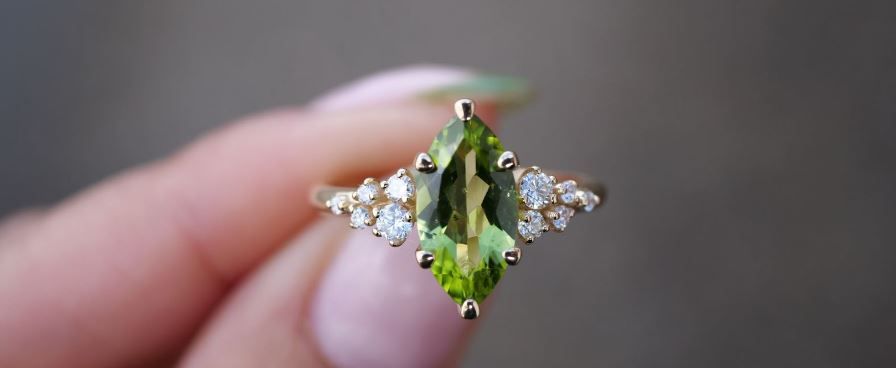
DiamondsByMe has recently added pink and green tourmaline to our collection. Pink tourmaline differs greatly from the other pink stone in our collection, pink sapphire. The latter is more baby pink, while pink tourmaline has a warmer tint, leaning towards dusty pink. Additionally, we offer green tourmaline, which has a very different hue from emerald. Green tourmaline tends towards moss green, a warm, deep, and natural shade. Tourmaline may contain inclusions, but the fewer inclusions, the higher the quality of the stone. Our tourmalines are transparent and clear, a delight for the eye in any piece of jewelry. Would you like to surprise your loved one with a beautiful piece of jewelry?
Consider an engagement ring with tourmaline, a unique stone for a unique person.
In these photos, you can see some examples of jewelry with pink or green tourmaline that we have created for our customers. Take a look at our various jewelry collections, and you may conclude that tourmaline is the stone for you!
Also check out: